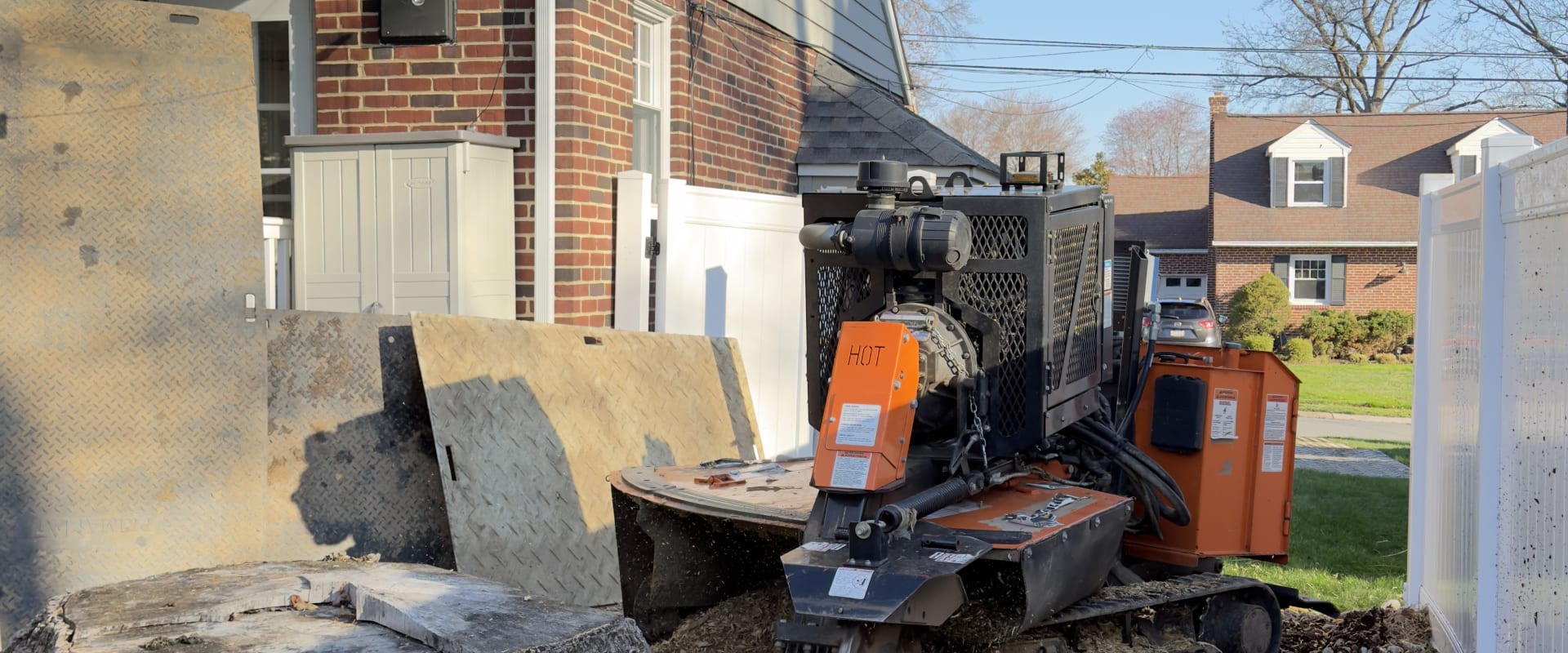
Stump Grinding vs. Stump Removal in Delaware: Costs, Pros & Cons (2026 Guide)
For most Delaware homeowners, stump grinding is the better choice. It costs $100-$500, takes under an hour, and handles 90% of residential situations. Full stump removal runs $300-$1,200+ and only makes sense when you're building a structure or replanting a tree in the exact same spot.
See our full tree removal cost guide →
Key Takeaways
- Stump grinding ($100-$500) suits most residential properties in Wilmington, Newark, Dover, and across New Castle County
- Full stump removal ($300-$1,200+) is only necessary for construction projects or same-spot replanting
- According to Angi, the national average for stump grinding is $175-$516 per stump (Angi, 2025)
- Roots left by grinding decompose naturally over 3-7 years without causing problems
- DIY stump grinding rentals run $150-$400/day but carry serious injury risk
What Is Stump Grinding?
Stump grinding removes the visible stump by shredding it into wood chips using a rotating cutting wheel. According to HomeAdvisor, stump grinding accounts for roughly 80% of all stump removal jobs because it's faster, cheaper, and less disruptive than full extraction (HomeAdvisor, 2025). Most residential stumps in Wilmington and Newark are fully ground in 30-90 minutes.
How Stump Grinding Works
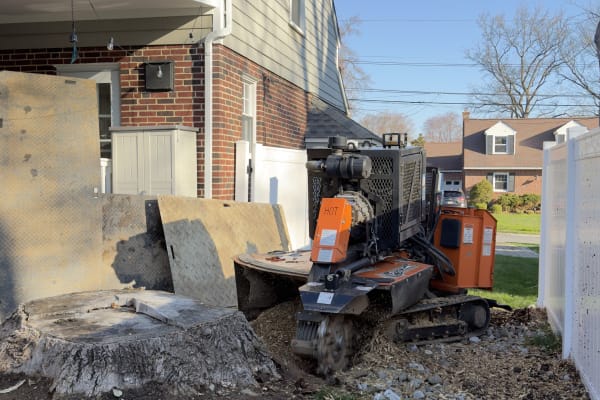
A stump grinder uses a carbide-toothed cutting wheel that sweeps back and forth across the stump. The operator lowers the wheel into the wood and advances it gradually, reducing the stump to a pile of coarse chips. Most professionals grind 6-12 inches below grade, which is deep enough to lay sod or plant a garden bed directly over the area.
The grinding process is surprisingly precise. Experienced crews can work around fences, garden beds, and utility lines. Compact grinders fit through standard 36-inch gates, which matters for fenced properties throughout Bear, Hockessin, and Pike Creek.
What's Left Behind After Grinding
The root system stays underground intact. This surprises many homeowners, but it's not a problem in most cases. Roots from ground stumps decompose naturally over 3-7 years depending on the tree species and soil conditions. Oak and hickory roots last longer; softer species like silver maple break down faster.
The ground-out hole fills with wood chip material. That's fine for mulched beds, but you'll need to add 4-6 inches of topsoil before seeding grass. The chips pull nitrogen from the soil as they decompose, so mixing in a starter fertilizer helps establish new turf.
View our tree services overview →
What Is Full Stump Removal?
Full stump removal extracts the entire stump and root ball from the ground using an excavator or skid steer. It's a significantly more invasive process. According to Angi, full removal costs 2-3 times more than grinding and is recommended in fewer than 20% of residential stump jobs (Angi, 2025).
Full stump removal costs $300-$1,200+ for Delaware homeowners, compared to $100-$500 for stump grinding. According to Angi (2025), full extraction accounts for fewer than 20% of residential stump jobs because grinding handles most yard and lawn applications effectively without the added cost or site disruption.
How Full Stump Removal Works
The crew digs around the root ball, severs lateral roots with a chainsaw or hydraulic attachment, and pulls the entire root system free. For a large oak or maple, this can mean disturbing a 6-8 foot radius around the former trunk. The stump and roots are then loaded and hauled away.
Full removal requires heavy equipment that needs clear access to the site. Narrow side yards, fences, and soft ground can all complicate the process. Backfilling the large hole with clean fill and topsoil is typically a separate cost.
When Full Removal Is Actually Necessary
Full removal makes sense in three specific situations. First, when you're building a deck, addition, patio, or other structure where the tree stood. Underground roots and decomposing wood create voids that compromise foundations and concrete slabs. Second, when you want to plant a new tree in the exact same location. The old root ball would crowd and compete with the new tree's root system. Third, when the root system carries fungal disease you need to fully eliminate before replanting.
For all other situations in Middletown, Glasgow, New Castle County, and beyond, stump grinding is the right call.
Stump Grinding vs. Stump Removal: Cost Comparison (2026 Delaware Prices)
Delaware stump grinding prices run slightly above national averages due to labor costs in the Mid-Atlantic region. According to HomeAdvisor, the national average for stump grinding is $287, with most homeowners paying between $175 and $516 per stump (HomeAdvisor, 2025). Delaware projects in Wilmington, Dover, and Newark typically land at the middle to upper end of that range.
Stump Grinding Prices in Delaware
| Stump Size | Diameter | Estimated Cost |
|---|---|---|
| Small | Under 12 inches | $100-$200 |
| Medium | 12-24 inches | $150-$350 |
| Large | 24+ inches | $300-$500+ |
| Multiple stumps | Per-stump rate | Often 10-20% discount |
Full Stump Removal Prices in Delaware
| Stump Size | Estimated Cost |
|---|---|
| Small to medium | $300-$600 |
| Large or complex root system | $600-$1,200+ |
| Backfill and soil restoration | $50-$200 additional |
Most Delaware homeowners doing a single-stump job save $200-$700 by choosing grinding over full removal. That savings grows with stump size.
In our experience grinding stumps across New Castle County since 2017, roughly 85% of homeowners who initially ask about full removal don't actually need it. Once we explain that the roots decompose harmlessly and grinding works fine for grass, gardens, and mulch beds, most opt for grinding and are happy with the result.
Pros and Cons of Each Method
| Factor | Stump Grinding | Full Removal |
|---|---|---|
| Cost | $100-$500 | $300-$1,200+ |
| Time on-site | 30 min - 2 hours | 2-6 hours |
| Equipment needed | Stump grinder | Excavator or skid steer |
| Root system removed | No - stays underground | Yes - fully extracted |
| Site disturbance | Low - small hole | High - large excavation |
| Ready for grass seed | Yes, add topsoil | Yes, after backfill |
| Ready for construction | No | Yes |
| Same-spot replanting | Not ideal | Yes |
| Access requirements | 36-inch gate clearance | Wide equipment access |
| Best for | 90% of residential jobs | Building or replanting |
Which Method Is Right for Your Delaware Property?
Most tree service companies present stump grinding and full removal as equal alternatives. They're not. Grinding is the correct default for Delaware homeowners in nearly all cases. Full removal is a specialized service for specific construction and replanting scenarios, not a premium upgrade you should pay for unless the job actually requires it.
The right method depends entirely on what you plan to do with the space afterward. Here's a clear decision guide.
Choose Stump Grinding If You Plan To:
- Seed grass or lay sod over the area
- Create a garden bed or mulched border
- Leave the area as open lawn
- Remove the stump for mowing convenience or safety
- Stay within a reasonable budget
This covers the vast majority of stump jobs across Wilmington, Bear, Pike Creek, and surrounding communities.
Choose Full Removal If You Plan To:
- Build a deck, patio, addition, or concrete structure on the site
- Plant a new tree in the exact same location
- Fully eliminate a root system carrying fungal disease
- Complete a major landscaping overhaul requiring a clean slate
When in doubt, grind it. Grinding is faster, less disruptive, and produces results that work well for almost every residential application in Delaware.
Contact us for a free stump grinding estimate →
What to Do With the Area After Stump Grinding
The area after grinding needs some basic prep before it looks like part of your yard again. The right approach depends on what you want the spot to become.
Seeding Grass Over a Ground Stump
Remove excess wood chips from the hole, leaving about 2 inches of chips as a base layer. Add 4-6 inches of quality topsoil and grade it smooth with the surrounding lawn. Seed with a mix appropriate for Delaware's climate (tall fescue works well in most of New Castle County), water consistently, and the area will fill in within 4-6 weeks during the growing season.
One note: the underground chips decompose slowly and may cause slight settling over the first season. Plan to add a thin layer of topsoil and reseed any low spots the following spring.
Creating a Garden Bed
Wood chip mulch from grinding makes excellent garden bed material. Rake the chips into a 3-4 inch layer, add a border of edging or stones, and plant perennials or shrubs. The chips enrich the soil as they break down. This is one of the lowest-maintenance outcomes and looks sharp in most Delaware yards.
Replanting a Tree Nearby
If you're replacing the removed tree, plant the new one at least 4-5 feet from the old stump location. This avoids root competition and any residual disease risk. The decomposing root system underground won't interfere with a new tree planted at that distance.
When to Call a Professional vs. DIY Stump Grinding
Stump grinder rentals run $150-$400 per day from equipment dealers in Delaware (HomeAdvisor, 2025). On paper, that looks like a way to save money on a $200-$300 professional job. In practice, it rarely works out that way.
Why DIY Stump Grinding Is Riskier Than It Looks
Stump grinders are among the most dangerous tools available for rental. The cutting wheel operates at high speed with exposed carbide teeth. Rocks, debris, and roots eject from the machine at force. Improper handling causes serious injuries every year.
Beyond safety, there's the skill factor. An experienced operator reads the wood grain, adjusts depth and angle, and avoids utility lines without thinking about it. A first-time operator grinds slowly, often unevenly, and risks hitting buried cable or conduit. In older neighborhoods across Wilmington and New Castle, buried utilities are common.
When DIY Makes Sense
DIY grinding can work for a single small stump (under 12 inches) in an open area with no buried utilities nearby. You should call 811 to mark utilities before renting any equipment. Budget a full day for what a professional does in 30 minutes.
When to Call a Professional
Call a licensed stump grinding service in Delaware when:
- The stump is over 12 inches in diameter
- There are buried utilities nearby
- The stump is close to a fence, foundation, or structure
- You have multiple stumps
- You're not comfortable operating heavy equipment
Professional crews in Wilmington, Newark, Dover, and Middletown carry the right insurance, know local utility locations, and get the job done in a fraction of the time.
Contact Blue Rock Tree Care for stump grinding →
Frequently Asked Questions
Can I grind a stump myself?
Yes, stump grinder rentals run $150-$400/day in Delaware, but the safety risks are significant. The cutting wheel ejects debris at high speed, and hitting a buried utility line causes serious damage. For stumps under 12 inches in an open area with no nearby utilities, DIY is possible. For anything larger or more complex, professional service is the safer and often more cost-effective choice. (HomeAdvisor, 2025)
How long does stump grinding take?
Most residential stumps in Delaware take 30-90 minutes to grind. A small stump (under 12 inches) can be done in 20-30 minutes. Large stumps over 24 inches, or hardwood stumps from oak and hickory, may take 2 hours. Multiple stumps on the same property are handled sequentially, and per-stump time drops when the crew is already set up on-site.
Will the stump grow back after grinding?
No. Grinding destroys the cambium layer and growth tissue of the stump. Suckers may sprout from lateral roots for one season, especially with species like black cherry or poplar that are prone to root suckering. Treating sucker sprouts with a cut-stump herbicide at the base eliminates them. Within two growing seasons, root suckering stops completely as the root system depletes its energy reserves.
Does stump grinding kill the roots?
Stump grinding kills the stump but leaves the lateral root system intact underground. The roots are no longer living after the stump is ground because the connection to the tree's above-ground growth is severed. They decompose naturally over 3-7 years. This decomposition is harmless for most landscape applications, though it causes minor soil settling that you should account for when seeding grass over the area.
How much does stump grinding cost in Delaware?
Stump grinding in Delaware typically runs $100-$200 for small stumps (under 12 inches), $150-$350 for medium stumps (12-24 inches), and $300-$500+ for large stumps over 24 inches. The national average is $287 per stump according to HomeAdvisor (HomeAdvisor, 2025). Delaware prices in Wilmington, Newark, and Dover fall at the middle to upper end of that range due to Mid-Atlantic labor costs.
That old stump doesn't have to sit there through another Delaware summer. Blue Rock Tree Care handles stump grinding and full removal across Wilmington, Newark, Dover, Bear, Glasgow, Middletown, Hockessin, Pike Creek, and all of New Castle County. We're licensed, insured, and have been serving Delaware since 2017.
Get a free estimate or call 302-408-0626 to schedule your service. You can also explore our full tree care services to see everything we handle across the First State.