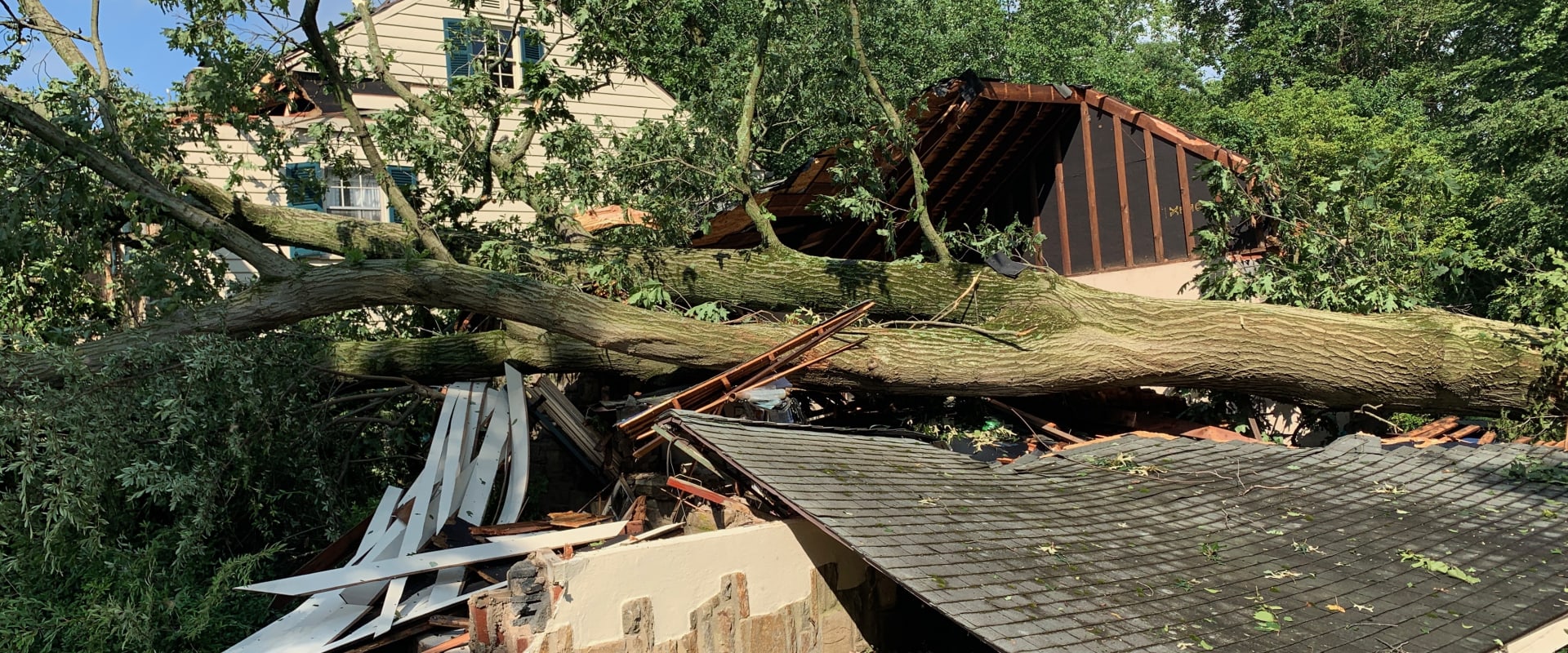
How to Prepare Your Trees for Delaware Storm Season: Complete 2026 Checklist
Homeowners in Delaware file millions in tree-related storm damage claims every year. The Insurance Information Institute reports that wind and hail events account for roughly 40% of all U.S. homeowner insurance claims, with falling trees and limbs among the top causes of structural damage. Most of these incidents are preventable with the right preparation before storm season starts.
View our storm damage prevention services →
Key Takeaways
- Delaware trees face two primary threats: nor'easters (October-April) and tropical storm remnants (June-November)
- Wind and hail events cause roughly 40% of all U.S. homeowner insurance claims (Insurance Information Institute, 2024)
- Pre-season pruning by a qualified arborist is the single most effective way to cut storm failure risk
- High-risk species in Delaware include Silver Maple, Bradford Pear, and Tree of Heaven
- 24/7 emergency tree service is available across Delaware at 302-408-0626 when storms strike
Why Are Delaware Trees Especially Vulnerable to Storm Damage?
Delaware trees face a combination of soil conditions, weather patterns, and canopy age that makes them more prone to storm failure than most homeowners realize. NOAA data shows Delaware averages 4-6 nor'easters annually, plus 2-4 named tropical systems that track through the Delmarva Peninsula each season. Clay-heavy soils common across New Castle County saturate quickly, cutting root-holding strength by as much as 50%.
Several factors compound this risk across the state.
Clay soils and waterlogged roots. Delaware's coastal plain and piedmont zones both carry significant clay content. When soils saturate during prolonged rain events, the mechanical resistance that holds a tree upright drops sharply. A mature oak that stands firm in dry conditions can uproot in the same wind on a wet day.
Aging urban canopy. Established neighborhoods in Wilmington, Newark, Bear, and Hockessin are lined with large, mature trees that haven't received consistent professional care. Deferred maintenance creates hidden structural defects. The USDA Forest Service estimates that urban trees in the northeastern U.S. receive adequate maintenance only 20-30% of the time.
Nor'easters hit hardest when leaves are on. Late-season nor'easters in October and November strike when many trees still carry their leaf canopy. Leaves dramatically increase the surface area wind pushes against, multiplying the force on root systems and branch attachments.
Tropical remnants bring saturated ground plus wind. Tropical systems that weaken as they move through the mid-Atlantic still produce sustained winds of 30-50 mph over Wilmington, Dover, and Middletown, often after days of heavy rain that have already compromised soil stability.
In our nearly nine years responding to storm calls across Delaware, we've found that the trees most likely to fail aren't the oldest or the largest. They're the ones with deferred maintenance combined with a structural defect that was never addressed - a co-dominant stem, an old wound, or fungal decay at the base.
Pre-Storm Tree Inspection Checklist
A thorough pre-season inspection is the foundation of storm preparation. Walking your property systematically before June catches problems while there's still time to address them. The ISA (International Society of Arboriculture) recommends professional tree assessments every 3-5 years for mature trees, and annually for trees near structures.
Work through this checklist for every significant tree on your property.
1. Dead or hanging branches. Any dead limb overhanging a roof, driveway, walkway, or outdoor living space is a priority hazard. Dead wood loses tensile strength rapidly and doesn't need extreme wind to fall.
2. Trunk cracks, splits, and cavities. Deep vertical cracks or open cavities indicate compromised internal structure. Co-dominant stems (two main trunks of equal size) with included bark between them are among the most common causes of catastrophic storm failure.
3. Fungal growth at the base. Shelf fungi or mushrooms at the root flare signal internal decay that may already be extensive. The visible fungal body is the final stage of a decay process that started years earlier.
4. Lean change and soil heaving. Has the tree developed a new lean since last season? Is the soil lifting on the windward side of the base? Both indicate root system compromise. Check after any period of prolonged rainfall.
5. Unbalanced canopy weight. Trees with one-sided canopies exert uneven force on their structure in wind. Corrective pruning redistributes weight and reduces the leverage that causes branch failure.
6. Proximity to structures and power lines. A tree that might survive a storm in an open field presents a very different risk profile when it overhangs your roof or sits near Delmarva Power distribution lines. Consequence matters as much as likelihood.
7. Recent root zone disturbance. Utility trenching, grading, or construction within the last 2-3 years can sever or compact roots in ways that aren't yet visible above ground. These trees need extra scrutiny.
8. Species identity. Some species carry inherently higher storm risk. Identify any Silver Maple, Bradford Pear, Siberian Elm, or Tree of Heaven on your property and treat them as priority inspection items.
9. Cabling or bracing hardware. If a tree has older cable or rod systems installed, inspect the hardware and attachment points. Old cables can fail, and braced splits can re-open under storm loads.
10. Crown density. An unusually dense crown with little interior air movement catches wind like a sail. Crown thinning opens the canopy, allowing wind to pass through rather than push against the tree.
9 Warning Signs Your Tree Needs to Come Down →
Pruning Techniques That Reduce Storm Risk
Proper pre-storm pruning by a qualified arborist reduces the risk of tree failure during high-wind events. The ISA identifies crown thinning, deadwood removal, and structural pruning as the three primary techniques for improving a tree's wind resistance. Research cited by the ISA indicates well-maintained trees sustain 50% less storm damage than neglected ones (International Society of Arboriculture, 2023).
Pruning is the most effective single action you can take to improve storm resilience. Done correctly, it reduces wind load and eliminates the mechanical failures that cause most storm damage. Done incorrectly, it creates new vulnerabilities.
Crown Thinning
Crown thinning removes selective interior branches to open the canopy. Wind passes through a thinned crown instead of pushing against it. A 15-20% reduction in canopy density can meaningfully cut the force exerted on the root system during a storm. This work requires a trained eye. Random cuts don't produce a balanced result.
Deadwood Removal
Every dead branch in your tree's canopy is a storm projectile waiting to launch. Deadwood removal is routine maintenance that most mature trees need every 3-5 years. It doesn't change the tree's shape or health. It simply eliminates branches that have no structural integrity remaining.
Structural Pruning
Structural pruning addresses the underlying architecture of the tree: co-dominant stems, branches with included bark (where the branch tissue has grown into the trunk creating a weak union), and limbs with poor attachment angles. This work is most effective on young trees but can reduce risk in mature ones. It's the closest thing to storm-proofing a tree's long-term structure.
What Not to Do
Topping (cutting back to stubs), lion-tailing (stripping all interior foliage), and flush cuts all create wounds and regrowth patterns that make trees more vulnerable over time, not less. If a contractor quotes topping as a storm-preparation strategy, find a different contractor.
High-Risk Tree Species in Delaware
Several tree species commonly found in Delaware residential landscapes carry structurally weak wood or poor branching habits that increase storm failure rates. The USDA Forest Service identifies Silver Maple, Bradford Pear, and Tree of Heaven as among the most problematic urban trees in the mid-Atlantic, noting their elevated wind throw and branch failure rates compared to native species (USDA Forest Service, 2022).
Not all trees fail at equal rates. Species biology plays a large role in storm performance, and Delaware's residential landscapes carry several high-risk species in significant numbers.
Silver Maple (Acer saccharinum)
Silver Maple is one of the most common shade trees in Delaware neighborhoods. It grows fast, which makes it attractive at planting. That same fast growth produces brittle wood with weak branch attachments. In high winds, Silver Maple is among the first species to drop large limbs. If you have one overhanging a structure, get it assessed before every storm season.
Bradford Pear (Pyrus calleryana)
Bradford Pear was planted extensively across Delaware suburbs in the 1980s and 1990s. The tree has a naturally narrow, upright form with branches that grow at acute angles from the trunk. Those attachments are structurally weak and fail predictably as the tree matures. Trees more than 15-20 years old are at high risk of catastrophic splitting in any significant wind event.
Tree of Heaven (Ailanthus altissima)
Tree of Heaven is an invasive species that grows aggressively across Delaware, particularly in urban areas of Wilmington and Dover. It produces large volumes of brittle, weak wood quickly, and it's deeply prone to storm failure. It's also a nuisance species with no redeeming landscape value. If you have it on your property, removal is the right answer regardless of storm season.
Other Species to Watch
Siberian Elm, White Mulberry, and large mature Willows near water features are also higher-risk species in Delaware. Any tree with a history of branch failure or structural defects moves to high-priority status regardless of species.
We've responded to hundreds of post-storm calls across New Castle County. Bradford Pear failures account for a disproportionate share of the residential damage we see. In many cases, the tree split completely at the central leader during a storm that other species on the same block survived without damage.
Emergency Preparedness Plan for Delaware Homeowners
A storm emergency isn't the time to start researching tree companies. Preparation before the season means faster, calmer responses when a storm is 24 hours out or when a tree comes down at 2 a.m. The Delaware Emergency Management Agency recommends all homeowners maintain a written storm action plan that includes emergency contractor contacts.
Before a Storm
- Save emergency numbers now. Blue Rock Tree Care provides 24/7 emergency tree service across Delaware. Save 302-408-0626 in your phone before you need it.
- Document your trees. Photograph all significant trees from multiple angles. This baseline documentation helps with insurance claims and helps our arborists assess pre-storm versus post-storm condition.
- Review your homeowner policy. Coverage for tree damage varies significantly by insurer and policy. Know what's covered before you're standing in front of a fallen tree.
- Stock tarps and plywood. If a limb breaches your roof, you'll need materials to prevent water intrusion while waiting for professional help.
During a Storm
Stay inside and away from exterior walls near large trees. Don't assess your trees during active wind events. Don't attempt to move a tree or limb that has landed on your car or near your home while conditions are still dangerous.
Notification Checklist
If a major storm is forecast for the Wilmington, Newark, Dover, Bear, or Middletown area, work through this list 24-48 hours before arrival:
- Move vehicles away from trees where possible
- Bring in outdoor furniture and loose items
- Check that gutters and drains are clear for heavy rainfall
- Note which trees are your highest-risk based on your inspection checklist
View our full emergency service details →
After-Storm Tree Assessment
When conditions clear, a systematic post-storm assessment protects you from secondary failures, which are common in the days and weeks after a major storm. Trees that appeared to survive intact sometimes have root damage or structural compromise that only becomes apparent later.
Power line contact is an automatic stop. If any tree or limb is touching a power line, don't approach it. Call Delmarva Power (1-800-375-7117) to report the hazard and stay clear until they confirm the line is de-energized. This is non-negotiable.
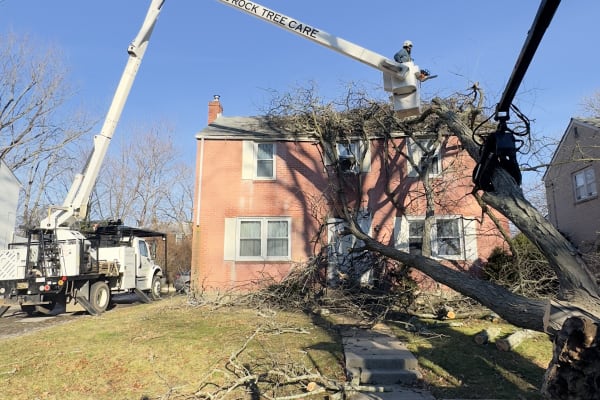
Don't attempt DIY removal of large failed trees. A tree that has partially failed, is leaning against a structure, or has root ball uplift is under enormous stored tension. It can shift suddenly without warning. This is among the most dangerous situations in tree work. It requires professional equipment and trained crew.
Look for these post-storm warning signs:
- New cracks or splits in the trunk or major branches
- Exposed roots or soil mounding at the base
- The tree is leaning that wasn't leaning before the storm
- Large hanging branches lodged in the canopy (called "widow makers")
- Bark torn or stripped from the trunk
Document before cleanup. Take photos and video of all damage before any removal or cleanup work begins. Insurance adjusters work from this documentation.
Schedule a professional assessment. Even trees that appear unharmed after a major storm should be evaluated if they're large, near structures, or species known for delayed failure. Call a qualified arborist for a post-storm tree assessment Delaware homeowners can rely on.
Frequently Asked Questions
Who pays for tree damage in Delaware when a neighbor's tree falls on my property?
Generally, the property owner where the tree was rooted bears responsibility only if they were negligent, meaning they knew or should have known the tree was hazardous. If a healthy tree falls during a storm, your own homeowner's insurance typically covers damage to your structures. Delaware follows the common negligence standard. Consult your insurer for your specific coverage details (Insurance Information Institute, 2024).
Is emergency tree removal covered by homeowners insurance in Delaware?
Most standard homeowner policies cover tree removal when a fallen tree damages a covered structure such as your roof, fence, or garage. Policies typically pay $500-$1,000 toward debris removal even if no structure was damaged. Coverage limits and deductibles vary widely. Review your declarations page and call your agent before assuming coverage. Document all damage thoroughly before any work begins.
When should I call an emergency arborist after a storm?
Call immediately if a tree or limb is resting on your home, a power line, or blocking access to your property. Also call if a tree is leaning that wasn't leaning before the storm, or if you can see a large hanging branch lodged in the canopy. Delayed failures are common after storms. Blue Rock Tree Care provides 24/7 emergency tree service across Delaware at 302-408-0626. Don't wait to see if a damaged tree stabilizes on its own.
How far in advance should I prepare my trees before Delaware storm season?
Start no later than April for the summer tropical storm season, and October for nor'easter season. Structural pruning and hazard tree removal need lead time, both for scheduling and for trees to compartmentalize pruning wounds before they face storm stress. The ISA recommends professional tree assessments every 3-5 years, with annual checks for trees near structures (ISA, 2023).
How do I know if my tree survived a storm or if it needs to come down?
A tree that has lost branches but maintained its root system and structural integrity can often recover. Look for these removal indicators: root ball uplift, a new lean of more than 15 degrees, trunk cracks that extend into the heartwood, or more than 50% of the canopy lost. When in doubt, get a professional tree assessment in Delaware. A qualified arborist can evaluate structural integrity and give you an honest answer. Removal is cheaper than the liability of a failing tree.
Storm season in Delaware is a reality, not a possibility. Nor'easters roll through from October to April. Tropical remnants track up the Delmarva Peninsula from June through November. That leaves a narrow window between seasons to assess, prune, and prepare.
The homeowners who come through storm season without significant tree damage are almost always the ones who prepared before the storm, not the ones who responded after it. A professional tree assessment costs a fraction of emergency removal, and emergency removal costs a fraction of repairing a roof that a tree came through.
Based on our emergency response calls across New Castle County from 2017-2025, roughly 65% of post-storm emergency removals involved trees that had at least one identifiable pre-existing defect visible before the storm. A pre-season inspection would have flagged the risk in most of those cases.
Call Blue Rock Tree Care at 302-408-0626 or contact us online to schedule your pre-season tree assessment. We serve Wilmington, Newark, Dover, Bear, Glasgow, Middletown, Hockessin, Pike Creek, and communities throughout Delaware, Pennsylvania, and Maryland. Our team is available 24/7 for storm emergencies.