Crane Tree Removal in Wilmington: Inside Our DelDOT Permit Job
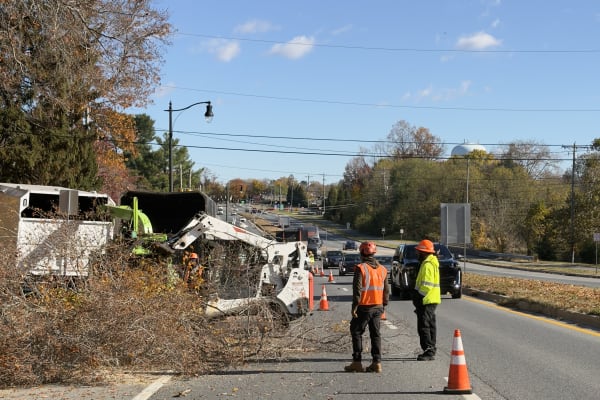
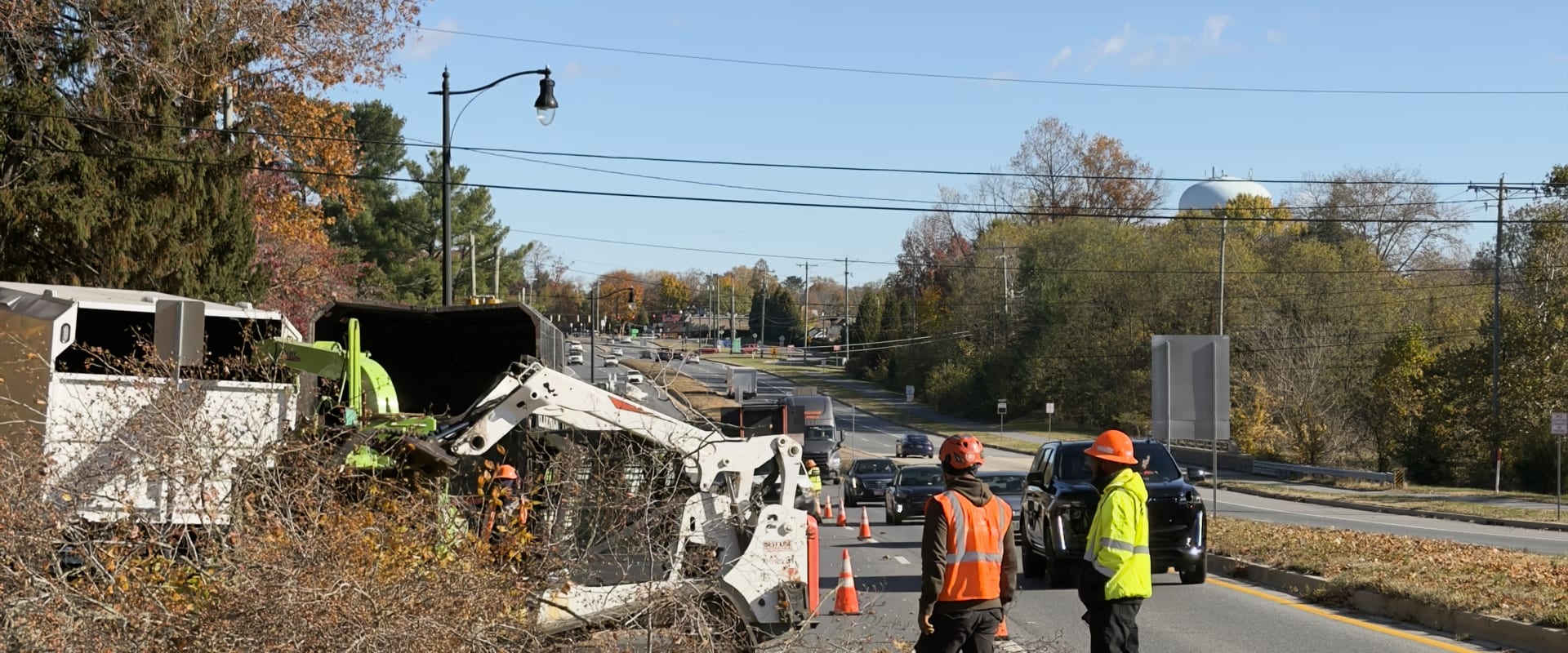
There was a 90-foot oak leaning over a main road in Wilmington. Power lines ran along one side of it. Cars, parked deliveries, and storefronts filled the other. The only way to bring it down without putting any of that at risk was to lift it out, one piece at a time, by crane.
That job is one of the more memorable removals we've taken on, and it's a good window into what crane work actually looks like across Delaware. People in Greenville, Hockessin, and Pike Creek call us about crane removals more often than you'd think, usually for the same reason. There's nowhere safe to drop the wood. This is a look at how we approach those jobs, what it actually costs, and what the rest of the process involves when a public road is part of the picture.
Explore Blue Rock's crane-assisted tree removal services →
Key Takeaways
- Crane-assisted removal is the preferred method whenever a tree can't be safely felled in one piece or rigged down from a climber's anchor, per ANSI Z133 (the U.S. safety standard for arboricultural operations).
- For Delaware crane work that affects a state-maintained road, DelDOT requires a Maintenance of Traffic (MOT) permit before any work starts, plus certified flaggers on site.
- Crane removal in Delaware typically runs $1,500 to $6,000+ per tree depending on size, access, road-closure requirements, and proximity to power lines.
- A crane day often costs less in total than a multi-day rigged removal, because the work goes faster and the staging is contained.
- Blue Rock has handled crane removals across Wilmington, Greenville, Hockessin, and Pike Creek since 2017, including jobs that required DelDOT lane closures.
Why a Crane Instead of a Climber or Bucket Truck?
Not every removal needs one. Most don't. A standard residential removal is a climber going up, sectioning the tree from the top down, and rigging each piece to the ground with ropes. That accounts for the majority of the work we do.
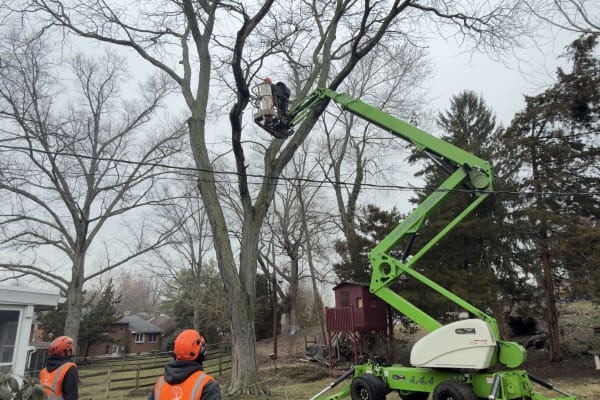
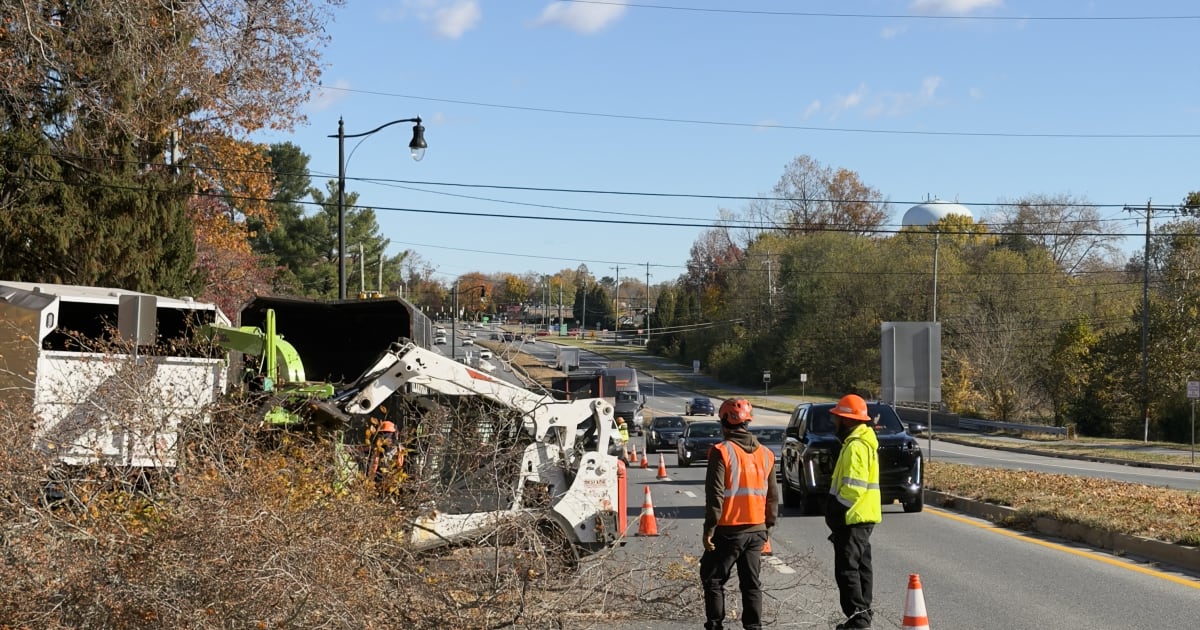
Where a crane changes the math is when there's no safe drop zone, when the tree is too compromised to climb, or when the cuts are happening directly over something that can't be hit. The 90-foot oak in Wilmington had all three problems at once. The trunk was leaning toward the road, the limbs were over storefronts and parked cars, and the wood condition didn't give us confidence in conventional rigging. A climber would have been working above moving traffic with limited fall paths. With a crane, the operator holds each section in place while the climber makes the cut, and the section never touches the ground until it's set down in the staging area.
We've found that the trees most likely to need a crane in this part of Delaware are large oaks (white, red, and pin), silver maples grown too close to a house, and storm-damaged conifers. North Wilmington's older neighborhoods, including Brandywine Hundred, parts of Westover Hills, and Pike Creek, have a high concentration of mature 70-to-100-foot specimens planted decades ago. Many are now overgrown for the lot. When those trees fail, they fail toward the house, the driveway, or the road. That's a crane job almost every time. Inside city limits, tight rowhome yards and curb-strip trees bring their own access and permit questions, which we cover on our Wilmington tree service page.
The trade-off is cost and coordination. A crane day is more expensive than a climbing day, and it needs a clear setup zone roughly 30 to 40 feet long for the truck itself. If the crane can't get close enough, the job doesn't work. We always check the access before we quote.
What Was Actually on the Line With the Wilmington Job?
The Wilmington oak was a hazard call. The homeowner had been watching the lean get worse over the previous year. The property line ran right along the curb. A failure event would have put the tree across two lanes of traffic and into the power service feeding the block.
We walked the site twice before any work started. The first walk was to confirm a crane could reach it. The trunk sat about 18 feet off the road edge, so the crane could set up curbside without going on the property. The second walk was with the operator to set the pick angles and figure out the staging plan. The wood was going to come down in roughly seven sections, each weighing a few thousand pounds. We needed somewhere to set each one down without holding traffic longer than necessary.
"With fences, play sets, and power lines surrounding the tree, they did an amazing job!" — Joanne Ott, Delaware
That quote is from a different removal, a diseased oak in a tight residential yard, but it describes the same constraint we work around all the time. The 90-foot oak in Wilmington was that problem multiplied by traffic and a state-maintained road. The DelDOT piece is what made it different from a routine crane removal in a backyard.
On this one, we had two flaggers, the crane operator, two climbers, two ground crew, and a chipper running constantly. That's a seven-person crew for a single tree, plus the DelDOT-approved traffic control setup. We've done bigger jobs by headcount over the years, but a road-side removal of that size is one of the more involved single-day operations we'll take on.
How the DelDOT Permit Process Actually Works
Any tree work that requires partial or full closure of a Delaware state-maintained road must be performed under a DelDOT-issued Maintenance of Traffic (MOT) permit, with a traffic control plan based on the Manual on Uniform Traffic Control Devices (MUTCD) adopted by Delaware. The plan must show the work zone, sign placements, lane configuration during closure, and closure duration. Certified Work Zone Traffic Control flaggers are required on site for the duration of the closure. (Source: Delaware Department of Transportation, deldot.gov)
Here's what that looks like in practice for a tree removal. The homeowner usually doesn't pull the permit. We do, as the contractor performing the work. We submit the traffic control plan showing where the cones will go, where the flaggers will stand, the lane configuration during the work, and how long the closure will last. DelDOT reviews it. If the plan is sound, the MOT permit comes back with conditions attached.
For a tree removal, those conditions almost always include:
- Two certified flaggers, one on each end of the work zone.
- Advance warning signs posted at the minimum required distances.
- Closure limited to specific hours, usually off-peak.
- A registered DelDOT contractor performing the work.
- A field inspector available if anything escalates.
The timeline from application to approved permit varies. We try to give DelDOT at least a week of lead time. Emergency work after a storm can move faster, but standard scheduled removals follow the regular process.
What this means for the homeowner is that the cost of the job has to include the permit, the flaggers' time, the additional cones and signage, and the scheduling around DelDOT-approved hours. It isn't optional. We've seen tree services try to do these jobs without the permit, and the outcome is usually a stop-work order, a fine to the contractor, and a much harder conversation with the property owner about why a one-day job took three weeks.
What a Crane Removal Looks Like, Section by Section
The crane is the safety mechanism. Everything else is rigging discipline. On the Wilmington oak, the day broke down roughly like this.
Setup, 7:00 to 9:30 a.m. Crane positioned on the road shoulder. Outriggers down on heavy mats to spread the load. Cones, signs, and flaggers in position before any traffic was diverted. Climber up the tree with the choker cable.
First three picks, 9:30 a.m. to noon. Top of the canopy down in sections. The climber chokered each piece, the crane took the weight, the climber cut, and the operator swung the section out to the staging area. Ground crew sectioned each piece for the chipper. Each pick ran roughly 15 to 20 minutes from rigging to set-down.
Mid-tree, noon to 2:30 p.m. The bigger pieces, weighing 2,000 to 3,500 pounds. Pick angle and load weight have to be confirmed by the operator on every cut. A wrong pick can rotate the section into the climber, swing it into the truck, or shock the crane. Every pick was confirmed by radio before the saw started.
Lower trunk, 2:30 to 4:00 p.m. Once the canopy is gone, the trunk comes down in clean rounds. By this point traffic had been moving on a single-lane bypass for about six hours.
Cleanup, 4:00 to 6:00 p.m. Everything chipped, the curb swept, mats lifted, cones picked up. Road back to full open.
By the next morning, the only sign anything had happened was the stump.
"They were professional and did an excellent job. After the tree was down, and the stump was ground up, they cleared away the sawdust and wood chips, replacing it with top soil." — Diane Finocchiaro, Local Guide
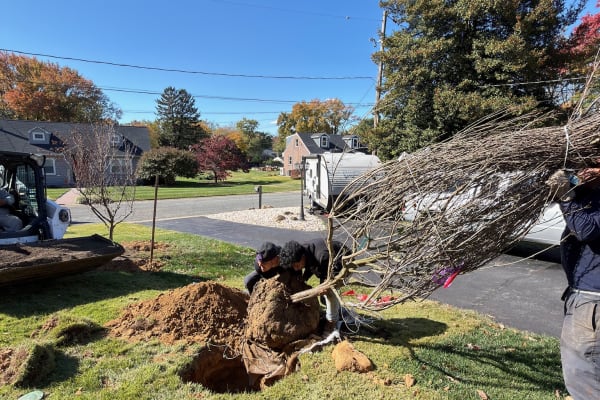
That review is from a different removal of a leaning oak, but the principle is the same. The work isn't done when the tree is on the ground. It's done when the property is left better than we found it.
How Much Does Crane Tree Removal Cost in Delaware?
The honest answer is a range. Crane-assisted removals in Delaware typically run from $1,500 for a smaller crane-assist on a contained backyard job to $6,000 or more for a full road-closure removal of a large hazardous tree. Most of the residential crane jobs we quote in Greenville, Hockessin, and Pike Creek fall between $2,500 and $4,500.
What moves the number:
- Tree size and weight. A 60-foot pine is a different pick load than a 90-foot oak. The crane has to be sized to the work.
- Access. If the crane can set up curbside with no rigging gymnastics, the day goes faster. If we have to swing pieces over a house, time and complexity both go up.
- Road closure. A DelDOT MOT permit, certified flaggers, and off-peak scheduling all add cost.
- Power line proximity. Working near energized lines may require coordination with Delmarva Power and a separate spotter.
- Cleanup scope. Some homeowners want the wood left in rounds for firewood. Others want everything hauled. Either is fine, but it affects the line item.
Across the residential crane removals we've completed in north Wilmington since 2017, the average all-in cost has been a little under $3,400. About one in five of those jobs required some kind of road or alley closure. The rest were driveway or off-street setups. Cost expectations for homeowners can swing widely based on what a neighbor paid for a smaller or larger job, so the only number that really matters is the one tied to your specific tree and access.
A crane often costs less in total than a multi-day rigged removal. We finished the Wilmington oak in a single day. The same tree without a crane would have been three days minimum, with more risk on every cut. For a deeper breakdown of tree removal pricing in general, our Delaware tree removal cost guide covers the standard (non-crane) ranges.
When Should You Ask Your Tree Service About a Crane?
If any of these describe your tree, bring it up at the estimate:
- It's leaning toward your house, garage, or a neighbor's structure.
- It's over a public road, sidewalk, or driveway with limited fall space.
- It's dead, hollow, or split, and a climber wouldn't have safe attachment.
- It's near power lines or a service drop to the house.
- A previous quote was higher than expected, or another tree service told you they couldn't safely take it down.
A good tree service will tell you when a crane is the right call and when it isn't. The wrong move is to push a crane on a job that doesn't need one, and the equally wrong move is to skip the crane on a job that does. We try to make that call honestly, even when it means a slightly higher quote.
"When a tree came down on our garage at our new house, we didn't know who to call. Neighbors recommended Blue Rock. They came out the very next day. Nick and Brandon were very professional. They handled the downed tree immediately and the price was completely reasonable. We're talking like a giant tree." — Mallory Greene, Delaware
That kind of speed matters when a tree is already on a structure. For pre-emptive removals you have time to compare quotes, plan the access, and schedule around DelDOT or HOA approvals. For storm and emergency work, the right equipment on site fast is what matters most. Our emergency tree service in Delaware post covers what to expect when you have to make that call at 2 a.m.
If you're not sure whether your tree is at the point where it needs to come down at all, our guide to the warning signs your tree needs to come down is a useful first read before you book an estimate.
Get a free crane removal estimate in Delaware →
Frequently Asked Questions
How much does crane tree removal cost in Wilmington, DE?
Crane tree removal in Wilmington typically runs $1,500 to $6,000+ per tree. Most residential jobs we quote fall between $2,500 and $4,500. The biggest variables are tree size, crane access, whether a DelDOT lane closure is required, and proximity to power lines. We provide free on-site estimates so the number is tied to your actual tree.
Do you service Greenville and Hockessin, DE for crane removals?
Yes. We regularly do crane-assisted removals in Greenville, Hockessin, Pike Creek, and Brandywine Hundred. Many of the older estate properties in these communities have specimen oaks, beeches, and pines that are now too large or too close to structures for a conventional removal. We bring the same DelDOT-permitted crew setup to private-road jobs in those neighborhoods.
How quickly can you respond to a hazardous tree call in north Wilmington?
For urgent hazards, we can typically be on site within 24 hours and often the same day. If the tree is already on a structure or in the road, we treat it as an emergency call. Our emergency tree service line is 302-408-0626 and answered 24/7.
Do I need a permit for crane tree removal in Wilmington?
You don't pull the permit yourself. Your tree service does, if one is needed. If the work affects a state-maintained road, a DelDOT Maintenance of Traffic (MOT) permit is required before any closure. If the tree is on your private lot with off-street access, no permit is usually needed. City of Wilmington street trees follow a separate process through the city's Department of Public Works.
What's the difference between crane removal and bucket truck removal?
A bucket truck lifts a climber up to the tree, but the cut piece still has to come down by rigging or controlled drop. A crane lifts the cut piece itself, never letting it touch the ground until the operator sets it in the staging area. Crane removal is the safer option for trees over structures, over roads, or in any situation where you can't drop the wood.
Can you remove a tree near power lines?
Yes. We coordinate with Delmarva Power for any work close to energized service lines. For trees touching primary lines, the utility will usually need to de-energize or place a temporary cover before our crew can work. We've handled this on jobs across north Wilmington and the process adds time but it's straightforward.
Is crane removal really safer than climbing?
For the right job, yes. ANSI Z133, the U.S. safety standard for arboricultural operations, treats crane-assisted removal as the preferred method whenever a tree can't be safely felled in one piece or rigged from a climber's anchor. For a routine removal in an open yard, a climber is perfectly safe and faster. For a hazardous tree over a structure or a road, the crane is the better choice almost every time.
Get a Free Crane Removal Estimate in Delaware
Blue Rock has been doing crane and large-tree removals across Wilmington, Greenville, Hockessin, and Pike Creek since 2017. We're licensed, insured, and rated 4.9 stars across 85+ verified Google reviews, with nine years of hands-on experience across Delaware, Pennsylvania, and Maryland. If you have a tree that's leaning, dead, hollow, near a structure, or too big to take down conventionally, we'll come out and look at it for free.
Call us at 302-408-0626 or request a free estimate online. For urgent situations, we're available 24 hours a day, 7 days a week.
Explore Blue Rock's full range of tree care services in Delaware →